
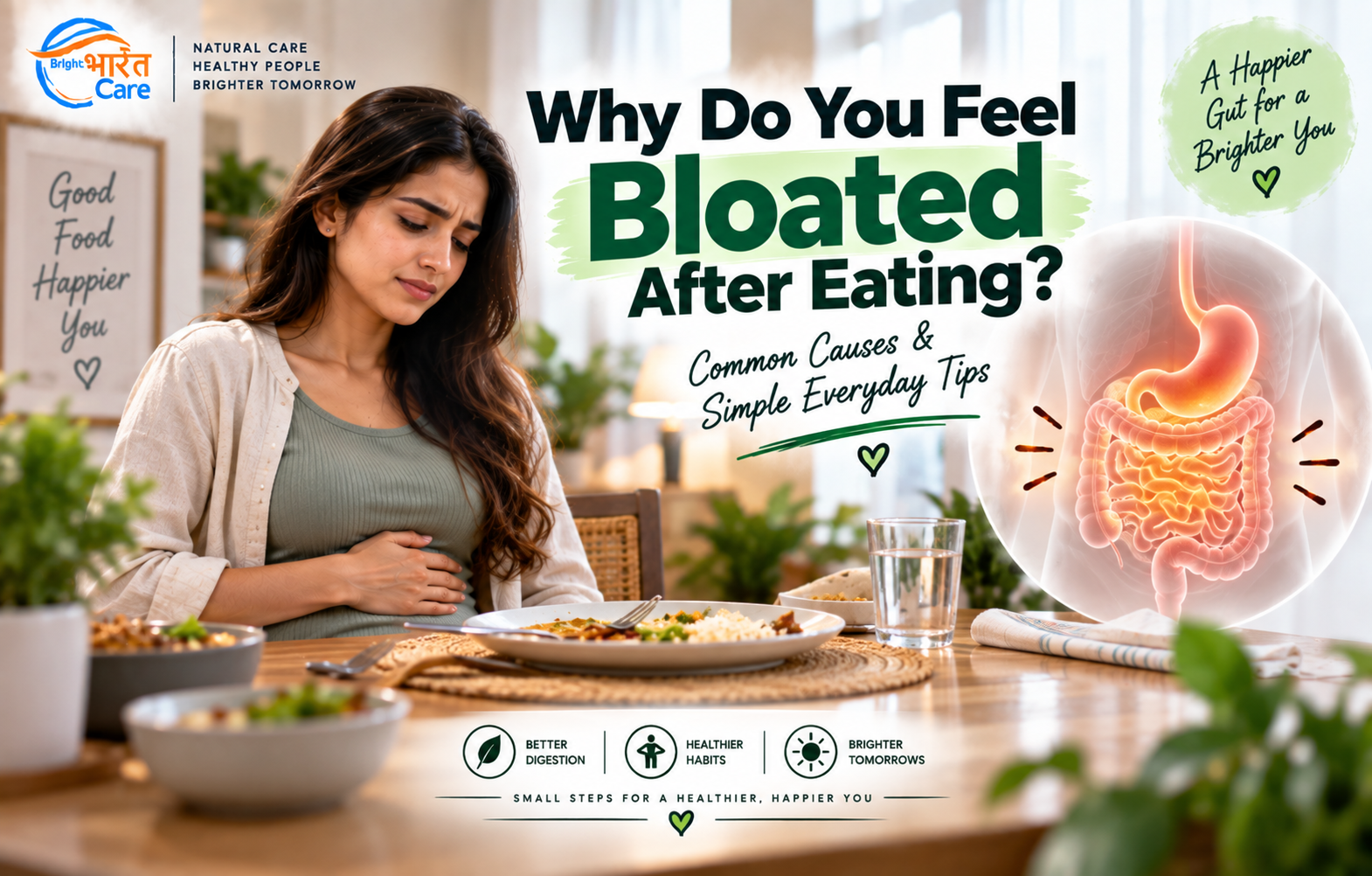
Why Do You Feel Bloated After Eating? Common Causes & Simple Everyday Tips
Have you ever finished a meal and suddenly felt as if your stomach had become unusually full, tight, or swollen?
You are not alone.
Bloating is a common digestive complaint, and many people experience it occasionally. Sometimes it happens after a large meal. Other times, eating quickly, swallowing air, constipation, fizzy drinks, certain foods, or individual digestive conditions may contribute.
The important thing to understand is that bloating is a symptom, not a single disease, and there can be many possible reasons behind it.
Let’s look at some common causes and practical everyday habits that may help.
What Does Bloating Actually Feel Like?
People describe bloating differently.
You may experience:
- A feeling of fullness or pressure in your abdomen
- Tightness or discomfort
- A visibly larger or swollen-looking abdomen
- Increased burping or passing gas
- Rumbling or digestive noises
- Mild abdominal discomfort
Bloating and gas can occur together, but they are not exactly the same thing.
Gas refers to gas present in the digestive tract, while bloating describes the sensation of abdominal fullness, pressure or swelling.
1. You May Be Eating Too Quickly
How you eat can sometimes matter almost as much as what you eat.
When you eat very quickly, you may swallow more air along with your food. Eating rapidly can also make it easier to consume a larger meal before you notice that you are becoming full.
Try slowing down.
Take smaller bites, chew comfortably, and give yourself enough time to eat instead of rushing through every meal.
2. Large Meals Can Leave You Feeling Uncomfortably Full
A very large meal naturally puts more food into your digestive system at once.
For some people, this can contribute to temporary fullness and bloating.
If you regularly feel uncomfortable after large meals, you may find it useful to experiment with more moderate portions and observe how you feel.
That doesn’t mean you need to eat tiny meals.
The goal is simply to recognize your own comfort level.
3. Fizzy Drinks Can Add Gas
Soft drinks, soda, sparkling water and other carbonated beverages contain carbon dioxide.
Some of that gas can enter your digestive system and contribute to burping or a bloated sensation.
If you frequently experience bloating, try reducing carbonated drinks for a while and see whether you notice a difference.
4. Certain Foods Naturally Produce More Gas
Some foods contain carbohydrates or fibres that are fermented by bacteria in the large intestine.
This process can produce gas.
Foods commonly associated with increased gas in some people include:
🫘 Beans and lentils
🥦 Broccoli
🥬 Cabbage
🧅 Onion
🥦 Cauliflower
🌾 Certain whole grains
But this does not mean these foods are unhealthy.
Many are nutritious sources of fibre, vitamins, minerals and other nutrients.
Individual tolerance varies considerably.
Instead of unnecessarily removing multiple healthy foods from your diet, pay attention to whether particular foods consistently cause symptoms for you.
5. Increasing Fibre Too Quickly Can Cause Problems
Fibre is an important part of a balanced diet and supports normal bowel function.
However, suddenly increasing fibre intake can sometimes lead to more gas and bloating.
For example, dramatically increasing beans, whole grains, vegetables or fibre supplements overnight may be uncomfortable for some people.
A more gradual increase can give your digestive system time to adjust.
Adequate fluid intake is also important when increasing dietary fibre.
6. Constipation Can Make You Feel Bloated
If bowel movements are infrequent or difficult, bloating and abdominal discomfort may occur.
Constipation can have many possible causes, including changes in diet, insufficient fibre or fluids, reduced physical activity, medications, changes in routine, and certain medical conditions.
Regular physical activity, adequate fluids and an appropriate amount of dietary fibre can support normal bowel habits for many people.
Persistent constipation should be discussed with a healthcare professional.
7. Some People Have Difficulty Digesting Certain Foods
Repeated bloating after particular foods may sometimes be related to food intolerance or another digestive issue.
For example, people with lactose intolerance may experience bloating, gas, abdominal discomfort or diarrhoea after consuming certain dairy products containing lactose.
Other food components can also trigger digestive symptoms in susceptible individuals.
However, don’t diagnose yourself based on one symptom.
Removing entire food groups without a clear reason can make your diet unnecessarily restrictive and may affect nutrient intake.
If symptoms repeatedly occur after particular foods, discuss them with a qualified healthcare professional or dietitian.
8. Sugar Alcohols Can Cause Digestive Symptoms in Some People
Some sugar-free products—such as chewing gum, sweets, protein products and other processed foods—may contain sugar alcohols.
Examples can include:
Sorbitol
Mannitol
Xylitol
Maltitol
These ingredients may cause gas, bloating or loose stools in some people, particularly when consumed in larger amounts.
If you regularly use sugar-free products and experience digestive discomfort, checking the ingredients list can be useful.
9. Swallowing Air Can Contribute Too
Eating is not the only way extra air can enter your digestive system.
You may swallow more air when you:
- Eat very quickly
- Drink through a straw
- Chew gum frequently
- Suck hard sweets
- Talk a lot while eating
- Consume carbonated drinks
You do not need to obsess over avoiding air.
But if you experience frequent burping or bloating, these habits may be worth noticing.
10. Stress and Digestion Can Be Connected
Your brain and digestive system communicate closely with each other.
For some people, stress and anxiety can influence digestive symptoms.
This does not mean digestive discomfort is “just in your head.”
It simply means that your emotional state and digestive system can interact.
Regular movement, sufficient sleep, relaxation practices and other healthy ways of managing stress may support overall well-being.
If anxiety or stress is significantly affecting your daily life, professional support may also be helpful.
11. Your Menstrual Cycle May Affect Bloating
Some women notice more bloating around certain stages of their menstrual cycle.
Hormonal changes can contribute to changes in fluid retention and gastrointestinal symptoms.
Occasional cycle-related bloating can be common.
However, new, severe, persistent, or unusual abdominal or pelvic symptoms should not automatically be blamed on menstruation.
Simple Everyday Habits That May Help Reduce Bloating
There is no universal anti-bloating routine, because the cause can differ from person to person.
But these simple habits may be worth trying:
🍽️ Eat more slowly
Avoid rushing every meal.
🥗 Be mindful of portion size
Very large meals may increase feelings of fullness.
💧 Stay adequately hydrated
Regular fluid intake supports normal body and digestive functions.
🚶 Move regularly
Physical activity supports overall digestive health and bowel function.
🥤 Limit excessive fizzy drinks
Especially if you notice they make you uncomfortable.
🌾 Increase fibre gradually
Sudden large increases may cause additional gas.
📝 Notice patterns
Pay attention to foods, meal sizes and situations that repeatedly precede symptoms.
Should You Keep a Food and Symptom Diary?
If bloating happens frequently, a simple diary can sometimes help identify patterns.
For a couple of weeks, you could record:
What you ate
Approximate portion size
When you ate
When bloating appeared
Other symptoms
Bowel habits
This does not diagnose a condition, but it can provide useful information to discuss with a doctor or dietitian.
Avoid becoming overly restrictive based only on the diary.
Do You Need a “Detox” for Bloating?
Probably not.
Bloating can be uncomfortable, which makes claims about detox teas, cleanses, juices and quick fixes attractive.
But your digestive system does not need a trendy detox every time you feel bloated.
A better approach is to understand the possible cause and work on appropriate habits.
Be particularly cautious with products that promise to “flush toxins,” rapidly flatten your stomach, or cure digestive problems without evidence.
When Should You Speak With a Doctor?
Occasional mild bloating after a large meal is different from persistent or unexplained bloating.
Consider medical advice if bloating:
- Happens frequently or persists
- Is getting progressively worse
- Significantly affects your daily life
- Occurs with persistent diarrhoea or constipation
- Is accompanied by repeated vomiting
- Occurs with significant or severe abdominal pain
- Is associated with unexplained weight loss
- Occurs with blood in the stool or black stools
- Is accompanied by other concerning or unusual symptoms
Sudden severe abdominal pain, significant breathing difficulty, fainting, vomiting blood, or other severe symptoms may require urgent medical attention.
Don’t Automatically Blame One Food
When people experience bloating, they sometimes immediately decide:
“I need to stop dairy.”
“Gluten must be the problem.”
“I can’t eat lentils anymore.”
Sometimes a particular food really is involved.
But sometimes the cause may instead be meal size, eating speed, constipation, carbonated drinks, stress, or another digestive condition.
Before eliminating major food groups, try to understand the pattern and seek appropriate professional guidance when needed.
The Bottom Line
Bloating is common and can happen for many different reasons.
Eating too quickly, large meals, fizzy drinks, constipation, sudden increases in fibre, certain foods and individual food intolerances are just some possibilities.
Start with the basics:
Eat slowly.
Stay adequately hydrated.
Keep moving.
Increase fibre gradually.
Notice patterns rather than guessing.
And if bloating is persistent, worsening, severe, or accompanied by other concerning symptoms, don’t simply keep trying home remedies—get appropriate medical advice.
A Question for You
When do you notice bloating most—after a large meal, after certain foods, in the evening, or randomly?
Share your experience in the comments below. 💚
— Bright Bharat Care
This article is for general educational purposes and is not intended to diagnose or treat digestive conditions. Persistent, severe, worsening, or unexplained symptoms should be discussed with a qualified healthcare professional.





One comment
ABHINAV BHARDWAJAuthor
Thank you for reading! 🌿 At Bright Bharat Care, we believe that understanding your body and everyday habits is an important part of a healthier lifestyle. Bloating can have many possible causes, and simple changes such as eating slowly, staying hydrated, moving regularly, and noticing your personal food patterns may help you better understand your digestion. We hope this article was useful to you. What usually triggers bloating for you? Share your experience in the comments below. 💚
— Team Bright Bharat Care