
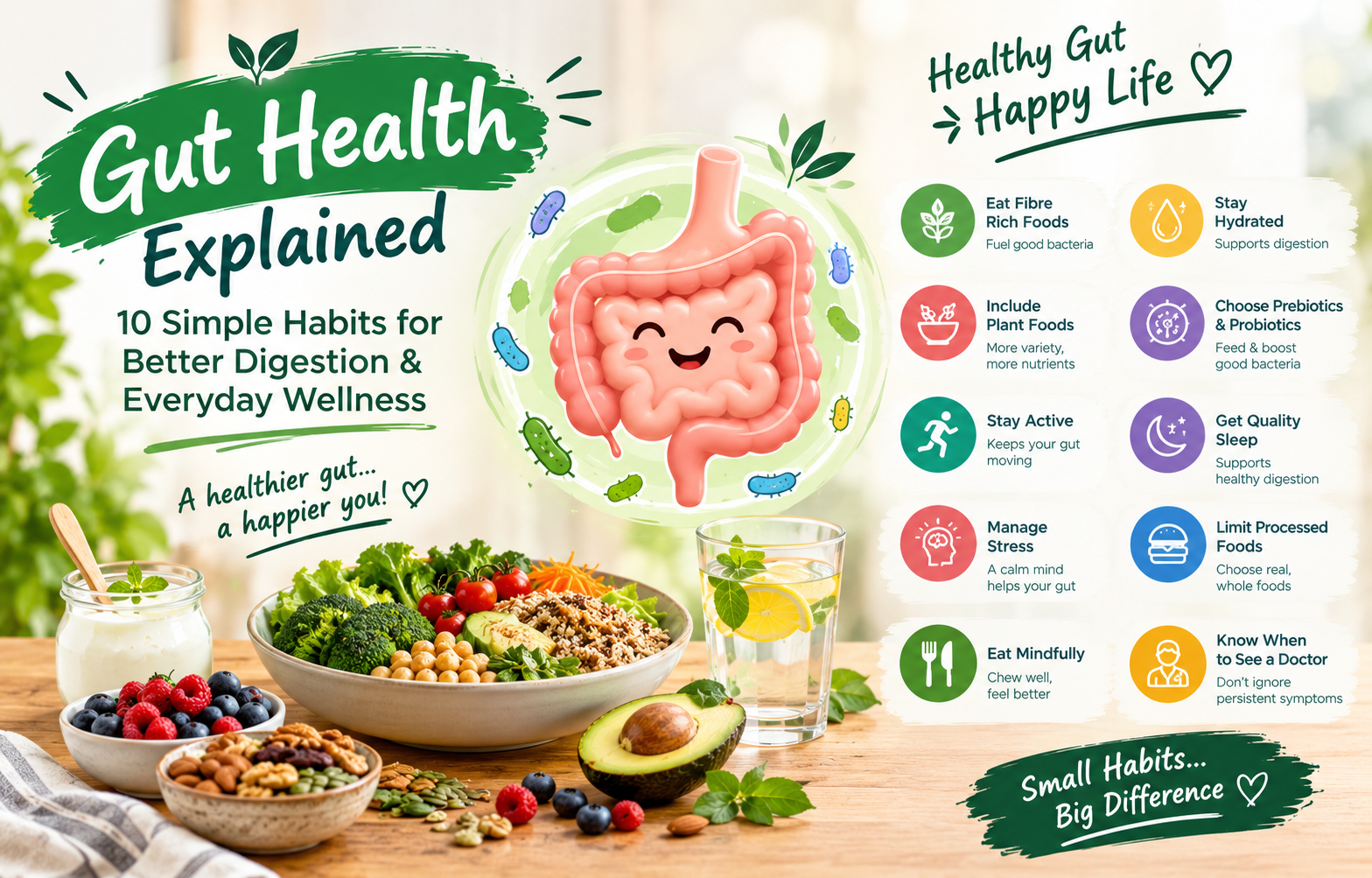
Gut Health Explained: 10 Simple Habits for Better Digestion & Everyday Wellness
Your digestive system does much more than simply process the food you eat. It breaks food down, helps your body absorb nutrients and plays an important role in your overall well-being.
In recent years, gut health has become a popular topic because researchers have learned more about the trillions of microorganisms that live in the digestive tract. These microorganisms, often called the gut microbiome, interact with the food we eat and with our digestive system.
The good news is that supporting your gut health does not necessarily require complicated diets or expensive products. Everyday habits such as eating enough fibre, drinking enough fluids, staying active and maintaining a regular sleep routine can all be part of a healthy lifestyle.
Let’s look at some simple habits that can support better digestive health.
What Is Gut Health?
Gut health generally refers to how well your digestive system functions and how the microorganisms living in your digestive tract interact with your body.
A healthy digestive system should be able to process food efficiently and support regular bowel movements without persistent discomfort.
Your gut is also home to a diverse community of microorganisms, including bacteria and other microbes. The balance and variety of these microorganisms can be influenced by factors such as diet, lifestyle, medications and other individual factors.
Gut health is therefore not about following one “perfect” diet. It is about developing sustainable habits that support your overall health.
10 Simple Habits to Support Gut Health
1. Eat More Fibre-Rich Foods
Fibre is an important part of a healthy diet and can support normal bowel function.
Good sources include:
- Fruits
- Vegetables
- Whole grains
- Oats
- Beans and lentils
- Nuts and seeds
Try adding fibre gradually rather than making a sudden major increase. This can make it easier for your digestive system to adjust.
For an Indian diet, simple choices such as dal, vegetables, fruits, whole grains, beans and salads can help increase dietary fibre.
2. Include a Variety of Plant Foods
Eating a wide variety of plant foods can provide different types of fibre and other nutrients.
Instead of eating the same vegetables and fruits every day, try including different colours and varieties throughout the week.
For example, your meals might include:
- Green leafy vegetables
- Carrots
- Tomatoes
- Beans
- Seasonal fruits
- Whole grains
- Pulses
A varied diet can be a practical way to provide different nutrients and fibres.
3. Understand Prebiotics and Probiotics
You may have heard the words prebiotics and probiotics when reading about gut health.
Prebiotics are certain types of dietary components, particularly fibres, that can be used by beneficial microorganisms in the gut.
Probiotics are live microorganisms that, when consumed in adequate amounts, may provide health benefits in specific situations.
Some foods containing live cultures include certain types of curd or yoghurt and fermented foods.
However, not every fermented food automatically contains probiotics with proven health benefits. Food processing, storage and the specific microorganisms involved can make a difference.
4. Stay Properly Hydrated
Fluids are important for many normal body functions, including digestion.
Drinking enough water throughout the day can also be helpful when you are increasing your fibre intake.
Your individual fluid needs can vary depending on factors such as:
- Weather
- Physical activity
- Age
- Diet
- Overall health
Instead of focusing on a fixed amount for everyone, pay attention to your body’s needs and your healthcare professional’s advice if you have a medical condition affecting fluid intake.
5. Eat Slowly and Pay Attention to Your Meals
Eating quickly can make it easier to overeat and may cause some people to experience digestive discomfort.
Try slowing down during meals and giving yourself enough time to chew your food properly.
Simple habits include:
- Sitting down while eating
- Taking smaller bites
- Chewing thoroughly
- Avoiding unnecessary distractions
- Paying attention to hunger and fullness
Mindful eating can make meals more enjoyable and may help you become more aware of how different foods affect you.
6. Stay Physically Active
Regular physical activity is beneficial for overall health and can also support normal digestive function.
You don’t necessarily need an intense workout.
Simple activities such as:
- Walking
- Cycling
- Swimming
- Yoga
- Household activities
- Strength training
can help you stay active.
If you currently have a sedentary lifestyle, start gradually and choose activities that you can maintain consistently.
7. Get Enough Quality Sleep
Sleep and digestion may seem unrelated, but your overall lifestyle can influence many aspects of your health.
An inconsistent sleep schedule, insufficient sleep and poor sleep habits can affect how you feel during the day and may also influence eating patterns.
Try maintaining a consistent sleep and wake schedule.
A simple nighttime routine can include:
- Reducing screen use before bed
- Avoiding very heavy meals close to bedtime
- Keeping your bedroom comfortable
- Going to bed at a consistent time
8. Manage Everyday Stress
Stress is a normal part of life, but ongoing stress can affect how some people experience digestive symptoms.
Different people may respond differently. Some may notice changes in appetite, bowel habits or abdominal discomfort during stressful periods.
You don’t need a complicated stress-management routine.
Consider simple activities such as:
- Walking outdoors
- Deep breathing
- Meditation
- Yoga
- Spending time with family
- Listening to music
- Taking regular breaks from work
Finding something that you can practice consistently is often more useful than trying to eliminate every source of stress.
9. Limit Excessively Processed Foods
Processed foods can absolutely be part of a normal diet. The concern is when highly processed foods regularly replace a wide variety of whole or minimally processed foods.
Try building most meals around foods such as:
- Vegetables
- Fruits
- Whole grains
- Pulses
- Nuts and seeds
- Protein-rich foods
You don’t have to completely eliminate your favourite snacks or occasional treats. The overall pattern of your diet matters more than one individual meal.
10. Pay Attention to Your Personal Food Patterns
There is no single “best gut health diet” that works for everyone.
Some people may notice digestive discomfort after particular foods, large meals, very spicy foods, carbonated drinks or certain dairy products. Others may have no problem with the same foods.
Keeping a simple food-and-symptom diary can sometimes help you notice patterns.
However, avoid unnecessarily eliminating large numbers of foods without professional guidance, especially if you are losing weight or struggling to maintain a balanced diet.
Common Gut Health Myths
The internet is full of claims about gut health. Some are useful, while others are oversimplified.
Myth 1: You need a gut detox.
Your body already has organs such as the liver and kidneys that perform important processes involved in removing waste. You generally don’t need special detox drinks or restrictive cleanses to “clean” your gut.
Myth 2: Everyone needs probiotic supplements.
Not necessarily. Probiotics can be useful in certain situations, but different strains have different effects. More is not automatically better.
Myth 3: One food can completely fix your gut health.
No single food can replace a balanced diet and healthy lifestyle.
Myth 4: Gut health means never having digestive symptoms.
Occasional gas, bloating or changes in bowel habits can happen to many people. Persistent, severe or unexplained symptoms should not simply be blamed on “poor gut health.”
When Should You Talk to a Doctor?
Digestive symptoms are common, but some symptoms deserve professional attention.
Speak with a qualified healthcare professional if you experience persistent or worsening digestive problems, especially if you have:
- Unexplained weight loss
- Blood in your stool
- Persistent or severe abdominal pain
- Persistent vomiting
- Significant or ongoing changes in bowel habits
- Difficulty swallowing
- Symptoms that repeatedly interfere with daily life
Do not rely solely on online information when symptoms are persistent, severe or unusual.
The Bottom Line
Supporting your gut health does not have to mean following a complicated diet or buying expensive wellness products.
Start with simple habits:
Eat a varied, fibre-rich diet.
Drink enough fluids.
Stay physically active.
Eat mindfully.
Get adequate sleep.
Manage stress.
Limit excessive reliance on highly processed foods.
Most importantly, focus on habits that you can realistically maintain over the long term.
Your digestive health is connected to your overall lifestyle, so small and consistent improvements can be a more practical approach than searching for a quick fix.
Disclaimer
This article is for general educational purposes only and is not intended to diagnose, treat, cure or prevent any disease or medical condition. Individual dietary and health needs can vary. If you have persistent digestive symptoms, an existing medical condition, or concerns about your diet, consult a qualified healthcare professional.





One comment
ABHINAV BHARDWAJAuthor
Thank you for reading! 🌿💚 At Bright Bharat Care, we believe that supporting your well-being starts with simple, consistent everyday habits. Gut health is influenced by many factors, including food choices, fibre intake, hydration, physical activity, sleep and stress. We hope this article helped you understand gut health in a simple and practical way. Which gut-friendly habit do you already follow in your daily routine? Share your experience in the comments below!
— Team Bright Bharat Care