
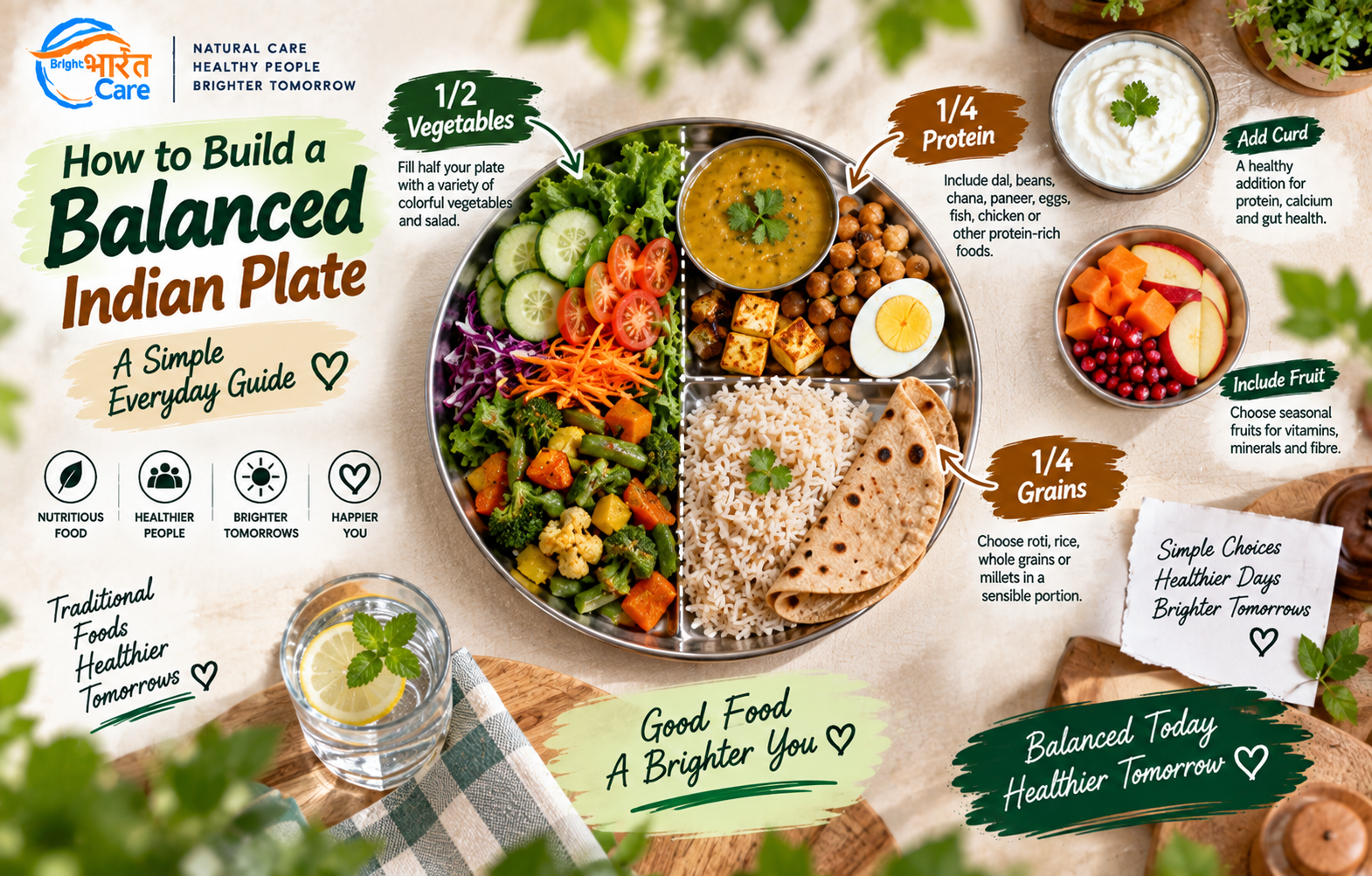
How to Build a Balanced Indian Plate: A Simple Everyday Guide
Eating a balanced diet sounds simple—until you actually have to decide what to put on your plate.
Should you stop eating rice?
Is roti healthier than rice?
How much dal is enough?
Do you need a bowl of salad with every meal?
And where does protein fit into a typical Indian thali?
The good news is that a balanced meal does not require expensive superfoods, complicated calorie counting, or giving up traditional Indian food.
With a little planning, everyday foods such as dal, roti, rice, sabzi, curd, beans, paneer, eggs, fish, chicken, fruits and vegetables can all be part of a nutritious eating pattern.
Let’s make it simple.
What Does a “Balanced Plate” Actually Mean?
A balanced plate is a practical way to include different food groups in appropriate proportions rather than allowing one type of food to dominate every meal.
A useful general approach is to think of your plate in three broad sections:
🥗 Around Half: Vegetables and Fruits
Make vegetables a major part of your meal and include fruit elsewhere in your day.
🌾 Around One Quarter: Grains or Other Staple Carbohydrate Foods
This could include roti, rice, millets or other grain-based foods.
🫘 Around One Quarter: Protein-Rich Foods
This may include dal, beans, chickpeas, paneer, curd, eggs, fish, chicken or other suitable protein sources.
This is a visual guide, not a strict medical diet plan. Individual requirements vary according to age, activity, health, culture and other factors.
1. Start With Vegetables
For many people, vegetables become the smallest item on the plate.
A little sabzi sits beside a large pile of rice or several rotis.
Try reversing that idea.
Include a generous variety of vegetables when practical.
Indian meals offer plenty of choices:
🥕 Carrot
🥬 Spinach and other leafy greens
🥒 Cucumber
🍅 Tomato
🫑 Capsicum
🥦 Cauliflower and broccoli
🎃 Pumpkin
🫛 Peas
🫘 Beans
🍆 Brinjal
🥒 Lauki, tori and other gourds
Different vegetables provide different nutrients, so variety matters.
You don’t have to eat every vegetable at every meal. Aim for diversity across the day and week.
2. Roti and Rice Are Not the Enemy
One of the biggest nutrition misconceptions is that you must completely stop eating rice or roti to eat healthily.
You usually don’t.
Carbohydrate-containing foods are part of many balanced diets and provide energy along with varying amounts of nutrients.
The more useful questions are:
How much are you eating?
What else is on your plate?
What type of grain are you choosing?
What are your individual health and energy needs?
Instead of filling almost the entire plate with rice or rotis, combine your staple food with vegetables and an appropriate protein source.
3. Choose Whole-Grain Options When Practical
Whole grains generally retain more of the original grain components than refined grains.
Depending on your preferences and local availability, options may include:
- Whole-wheat roti
- Oats
- Brown rice
- Barley
- Millets such as bajra, jowar or ragi
- Other whole-grain foods
This does not mean white rice or other refined grains can never be eaten.
A healthy eating pattern is about the overall diet, not making one food completely forbidden.
4. Don’t Forget Protein
A plate can contain plenty of food but still have relatively little protein.
Protein is needed for many normal functions in the body, including building and maintaining body tissues.
Indian diets offer both vegetarian and non-vegetarian protein options.
Vegetarian Sources
🫘 Dal
🫘 Rajma
🫘 Chana
🌱 Soy and tofu
🥛 Milk
🥣 Curd
🧀 Paneer
🥜 Nuts and seeds
Non-Vegetarian Sources
🥚 Eggs
🐟 Fish
🍗 Chicken
🥩 Meat
You don’t need every source at once.
Choose an appropriate protein-rich food that fits your preferences and meal.
5. Dal Is Nutritious—but Look at the Whole Meal
Dal is an excellent traditional food and provides protein, fibre and other nutrients.
But simply adding a very small spoonful of thin dal to a large plate of rice does not necessarily create a well-balanced meal.
Think about proportions.
For example:
Instead of:
🍚 Large amount of rice
🥄 Very little dal
🥔 Small amount of potato sabzi
Consider:
🍚 Moderate rice portion
🥣 A meaningful serving of dal
🥗 Plenty of vegetables
🥣 Curd if appropriate
The exact quantities depend on the individual, but the principle is to balance the components of the meal.
6. Add Fruit to Your Day
Fruit provides vitamins, minerals, fibre and other naturally occurring compounds.
Common Indian options include:
🍎 Apple
🍌 Banana
🍊 Orange
🥭 Mango
🍉 Watermelon
🍈 Papaya
🍐 Guava
🍇 Grapes
🍍 Pineapple
You don’t need imported berries or expensive exotic fruits to have a nutritious diet.
Choose fruits that are available, affordable and enjoyable for you.
Whole fruit is generally preferable to relying heavily on fruit juice because whole fruit retains its fibre and is easier to incorporate into a balanced eating pattern.
7. Include Healthy Sources of Fat
Dietary fat is an essential part of nutrition.
The goal is not to eliminate all fat.
Foods that can contribute fats include:
🥜 Nuts
🌻 Seeds
🥜 Peanuts
🥑 Avocado, where available
🐟 Certain fish
🫙 Cooking oils
Cooking oils should still be used in sensible quantities.
Deep-fried foods can be enjoyed occasionally, but they don’t need to become the foundation of everyday meals.
8. What About Ghee?
Ghee is widely used in Indian cooking.
It can be part of a diet, but the idea that something is traditional or natural means you can consume unlimited amounts is not accurate.
Ghee is rich in fat and energy and contains saturated fat.
The important idea is quantity and overall dietary pattern.
A small amount used as part of a balanced meal is very different from adding large quantities to everything because it is considered “healthy.”
9. Curd Can Be a Useful Addition
Plain curd or yogurt can provide protein and calcium and can fit naturally into many Indian meals.
For example:
Roti + sabzi + dal + curd
or
Rice + rajma/chana + vegetables + curd
can create a more varied meal.
People with specific dietary restrictions or intolerance may need suitable alternatives.
10. Be Mindful of Salt
Salt is an essential ingredient in cooking, but many people consume more sodium than needed.
Sodium can come not only from salt added at home but also from:
- Pickles
- Papad
- Namkeen
- Packaged snacks
- Sauces
- Instant foods
- Restaurant meals
- Processed foods
You don’t necessarily need to eat completely bland food.
Simply become aware of how much salt and high-sodium packaged food appears across your whole day.
11. Watch Added Sugar Without Becoming Afraid of Food
Tea, coffee, sweets, biscuits, desserts, sweetened beverages and packaged foods can all contribute added sugar.
You don’t have to declare that you will “never eat sugar again.”
A more sustainable approach is to recognize where added sugar is coming from and reduce unnecessary amounts.
For example, if you drink several cups of heavily sweetened tea every day, gradually reducing the sugar can make a meaningful difference over time.
What Could a Balanced Indian Breakfast Look Like?
There is no single perfect breakfast.
Some examples could include:
Option 1
Vegetable poha + curd + fruit
Option 2
Vegetable upma + curd
Option 3
Idli + sambar + vegetables
Option 4
Eggs + whole-wheat roti + vegetables
Option 5
Oats with milk/curd + fruit + nuts or seeds
Option 6
Besan chilla with vegetables + curd
The goal is to combine foods rather than relying only on refined carbohydrates or sugary packaged breakfast foods.
What Could a Balanced Indian Lunch Look Like?
A simple lunch might include:
🥗 Vegetables: sabzi and/or salad
🫘 Protein: dal, rajma, chana, paneer, curd, eggs, fish or chicken
🌾 Grains: roti or rice
🥣 Optional addition: curd
The exact combination can change every day.
What About Dinner?
Dinner does not have to be completely different from lunch.
A simple home-cooked meal can work well.
For example:
Roti + mixed vegetable sabzi + dal
or
Rice + fish/chicken + vegetables
or
Roti + paneer/tofu + vegetables + curd
The important thing is not whether the meal has a fashionable name.
It’s whether your overall eating pattern provides variety and balance.
Is Rice at Night Bad?
Rice does not suddenly become unhealthy after sunset.
What matters more is your overall diet, portion size, total energy needs, health circumstances and what you eat with it.
A large late-night meal may feel uncomfortable for some people, but that is different from saying:
“Rice after 7 PM turns into fat.”
Nutrition is rarely that simple.
Do You Need to Count Calories?
Not everyone needs to count calories.
For many people, focusing on:
portion awareness, food variety, vegetables, adequate protein, whole foods, and limiting excessive highly processed foods
can be a more practical starting point.
However, people with specific health, sports, or body-composition goals may benefit from more individualized nutrition planning with an appropriately qualified professional.
Don’t Make Your Diet Unnecessarily Expensive
Healthy eating is often marketed as:
🥑 Avocado
🫐 Imported berries
🌱 Exotic seeds
🥤 Expensive smoothies
📦 Special “diet” products
But nutritious eating can also be built around everyday Indian foods such as:
Dal
Chana
Rajma
Seasonal vegetables
Seasonal fruits
Roti
Rice
Curd
Eggs
Peanuts
Local grains
Nutrition does not have to be luxurious.
A Simple Way to Look at Your Plate
Before eating, take a quick look.
Ask yourself:
🥗 Where are my vegetables?
🫘 Where is my protein source?
🌾 How much of the plate is rice/roti or another grain?
🌈 Am I eating a reasonable variety of foods?
You don’t need to measure everything with a weighing scale.
The goal is to become more aware of the balance on your plate.
One Plate Will Never Define Your Health
A birthday dinner, wedding meal, festival sweet, restaurant outing, or plate of biryani does not suddenly make your entire diet unhealthy.
Likewise, one salad does not automatically make an otherwise poor diet healthy.
Your health is influenced by patterns repeated over time.
That is why a sustainable eating routine is generally more useful than constantly moving between strict dieting and overeating.
The Bottom Line
A balanced Indian plate doesn’t require abandoning Indian food.
Start with familiar foods and improve the proportions.
Aim for:
🥗 Plenty of vegetables and some fruit across the day
🫘 An appropriate protein source
🌾 A sensible portion of grains or staple carbohydrate foods
🥛 Dairy or suitable alternatives where appropriate
🥜 Appropriate sources of healthy fats
💧 Adequate fluids
And remember—your plate does not have to look perfect at every meal.
Small improvements made consistently can build a healthier eating pattern over time.
A Question for You
What usually takes up the largest part of your plate—roti, rice, sabzi, or dal? 🍛
Share your answer in the comments below. 💚
— Bright Bharat Care
This article provides general educational information and is not a personalized diet plan. Nutritional requirements vary according to age, activity level, health conditions, pregnancy, medications and other factors. People with specific medical or dietary needs should seek advice from an appropriately qualified healthcare professional.






One comment
ABHINAV BHARDWAJAuthor
Thank you for reading! 🍛💚 At Bright Bharat Care, we believe that healthy eating doesn’t have to be complicated or expensive. Everyday Indian foods like dal, roti, rice, sabzi, curd, fruits and other protein-rich foods can all be part of a balanced diet when we focus on variety and sensible portions. We hope this guide makes it easier to build a more balanced plate using foods you already enjoy. What does your everyday Indian plate usually look like? Share your favourite healthy combination in the comments below! 🌿
— Team Bright Bharat Care