
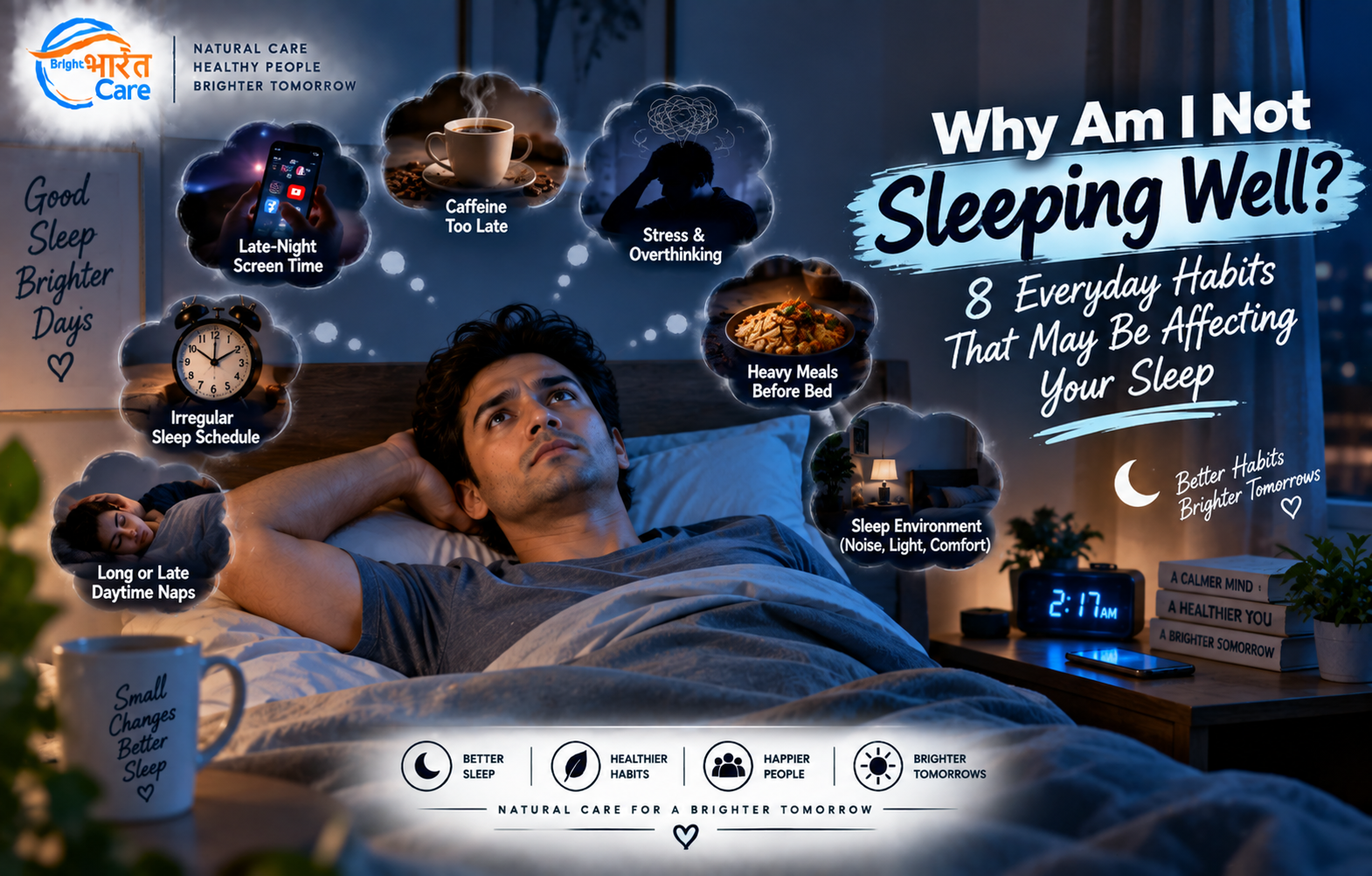
Why Am I Not Sleeping Well? 8 Everyday Habits That May Be Affecting Your Sleep
You go to bed tired, but sleep doesn’t come easily.
Or perhaps you fall asleep quickly but wake up several times during the night. Maybe you get what seems like enough hours of sleep and still wake up feeling unrefreshed.
If this sounds familiar, it may be worth looking at your everyday routine.
Sleep can be influenced by many things—from stress and health conditions to medications and sleep disorders. But sometimes, seemingly small daily habits can also make it harder to get a restful night’s sleep.
Here are 8 everyday habits that may be affecting your sleep and some practical changes you can consider.
1. Using Your Phone Right Before Bed
For many people, the phone is the last thing they look at before sleeping.
One short video becomes another. A quick social-media check turns into 30 minutes of scrolling. Messages, news, work emails and notifications can keep your mind engaged when you are trying to wind down.
Light exposure from screens in the evening may also affect the body’s normal sleep-wake timing.
What Can You Try?
Create a short screen-free period before bedtime.
You don’t necessarily need to remove technology from your entire evening. Start with something realistic—even putting your phone away a little earlier may help create a clearer transition between daytime activity and sleep.
Try replacing scrolling with:
📖 Reading
🎵 Calm music
🧘 Relaxation
📝 Preparing for tomorrow
💬 A quiet conversation
2. Going to Bed at a Different Time Every Night
11 PM today.
1 AM tomorrow.
Midnight the next day.
Then sleeping until late morning on the weekend.
Your body has an internal biological timing system that helps regulate when you feel awake and when you feel sleepy.
Frequently changing your sleep and wake times may make it harder to maintain a consistent sleep-wake rhythm.
What Can You Try?
Aim for a reasonably consistent bedtime and wake-up time, including weekends when practical.
You don’t need to follow the clock perfectly every day.
Consistency is the goal—not perfection.
3. Drinking Caffeine Too Late in the Day
That evening coffee might be affecting you more than you realize.
Caffeine is a stimulant found in:
☕ Coffee
🍵 Tea
🥤 Some soft drinks
⚡ Energy drinks
🍫 Chocolate
💊 Some medicines and supplements
People vary considerably in how sensitive they are to caffeine and how quickly their bodies process it.
For some people, caffeine consumed later in the day can make falling asleep more difficult or affect sleep quality.
What Can You Try?
Pay attention to when you consume caffeine and how it affects you.
If you regularly have difficulty sleeping, experiment with moving your last caffeinated drink earlier in the day.
4. Taking Long or Late Naps
A short daytime nap can feel refreshing.
But long naps—or naps taken late in the day—may reduce your natural sleepiness at bedtime, particularly if you already struggle to fall asleep at night.
This doesn’t mean naps are always bad.
The effect depends on your individual sleep needs, schedule and circumstances.
What Can You Try?
If nighttime sleep is difficult, pay attention to whether your daytime naps are long, frequent or too close to bedtime.
Changing the timing or duration may help.
5. Eating a Heavy Meal Very Close to Bedtime
Finishing a very large meal and immediately going to bed may feel uncomfortable.
Some people may experience:
- Fullness
- Bloating
- Indigestion
- Acid reflux or heartburn
These symptoms can make it harder to settle comfortably for sleep.
What Can You Try?
When practical, give yourself some time between a large meal and lying down.
If you are genuinely hungry close to bedtime, that doesn’t mean you must go to sleep hungry. The goal is simply to avoid making very large late-night meals a regular habit if they disturb your sleep.
People with persistent reflux or digestive symptoms should seek appropriate medical advice.
6. Spending Too Little Time Moving During the Day
Many modern routines involve long periods of sitting.
We sit while travelling.
We sit at work.
We sit while eating.
Then we sit in front of the television or phone in the evening.
Regular physical activity is associated with many health benefits and may also support healthy sleep.
What Can You Try?
Build more movement into your day.
You could:
🚶 Take a walk
🧘 Practise yoga
🚴 Cycle
🏋️ Exercise
🪜 Use stairs when appropriate
⏰ Take movement breaks during long periods of sitting
You don’t have to become an athlete.
Regular movement matters more than chasing a perfect workout routine.
7. Taking Stress and Work Into Bed
Your body may be lying in bed while your mind is still at work.
“What do I need to do tomorrow?”
“Did I reply to that email?”
“What if something goes wrong?”
“I need to remember this in the morning.”
Stress and worry can make it difficult to mentally switch off.
For some people, the pressure of thinking “I must fall asleep right now” can itself make sleep more frustrating.
What Can You Try?
Create a simple wind-down routine.
Before bed, consider writing tomorrow’s important tasks on paper so you don’t feel the need to keep rehearsing them mentally.
Other options include:
- Gentle breathing exercises
- Reading
- Meditation or relaxation practices
- A warm shower
- Calm music
- Quiet time away from work
If anxiety or stress is persistent or significantly affecting your life, professional support may be helpful.
8. Your Bedroom May Not Be Helping You Sleep
Sometimes we focus entirely on ourselves and forget about the environment.
Ask yourself:
Is my room too bright?
Is it noisy?
Is the temperature uncomfortable?
Are notifications constantly appearing?
Is my mattress or pillow uncomfortable?
Your sleeping environment can influence how easy it is to rest.
What Can You Try?
Where possible, make your bedroom:
🌙 Dark
🔇 Quiet
🌡️ Comfortable in temperature
🛏️ Comfortable for sleeping
Blackout curtains, reducing unnecessary lights, silencing notifications, or addressing disruptive noise may help depending on your situation.
Bonus: Are You Spending Too Much Time Awake in Bed?
If you regularly use your bed for work, social media, television and long periods of wakefulness, your brain may begin associating the bed with being awake rather than sleeping.
For people struggling with insomnia, behavioural sleep approaches often focus on strengthening the association between bed and sleep.
Try to keep your bed primarily associated with sleep rather than turning it into your office, dining table and entertainment centre.
How Much Sleep Do Adults Need?
For most healthy adults, major sleep-health guidance recommends at least 7 hours of sleep per night on a regular basis, although individual sleep needs can vary.
But duration is only one part of healthy sleep.
You could spend enough time in bed and still have poor-quality or frequently interrupted sleep.
Pay attention to both how long you sleep and how rested you feel during the day.
What About Alcohol?
Some people believe alcohol helps them sleep because it can initially make them feel drowsy.
However, alcohol can interfere with normal sleep and may contribute to disrupted sleep later in the night.
Using alcohol as a sleep aid is therefore not a good strategy.
Don’t Try to “Force” Yourself to Sleep
You look at the clock.
12:30 AM.
Still awake.
1:00 AM.
Still awake.
Now you start calculating:
“If I sleep right now, I can still get six hours…”
Constant clock-watching can increase frustration and anxiety around sleep.
Healthy sleep is not something you can always force through willpower.
Instead, focus on building conditions and routines that make sleep more likely.
A Simple Night Routine You Can Try
You don’t need an elaborate two-hour wellness routine.
A simple evening could look like this:
2–3 hours before bed: Finish very large meals where practical.
Earlier in the evening: Reduce work and stimulating activities.
Before bed: Dim unnecessary lights and reduce screen use.
30–60 minutes before bed: Do something calming.
At bedtime: Keep the bedroom dark, quiet and comfortable.
Morning: Try to wake at a reasonably consistent time and get some daylight.
You can adjust this routine to fit your lifestyle.
When Poor Sleep May Need More Than Lifestyle Changes
Not every sleep problem can be solved by putting your phone away.
Sleep difficulties can sometimes be related to:
- Insomnia
- Sleep apnoea
- Restless legs syndrome
- Pain
- Mental health conditions
- Certain medications
- Hormonal or medical conditions
- Other sleep disorders
Consider speaking with a qualified healthcare professional if you regularly struggle to sleep, frequently wake during the night, experience excessive daytime sleepiness, or your sleep problems persist despite improving your routine.
Loud habitual snoring, gasping or choking during sleep, witnessed pauses in breathing, or significant daytime sleepiness can be particularly important to discuss with a healthcare professional.
Don’t Depend on Sleeping Pills or Supplements Without Guidance
When sleep becomes frustrating, quick solutions can be tempting.
But sleeping medicines and supplements are not automatically appropriate for everyone.
Even products described as “natural” can have side effects, interact with medicines, or be unsuitable for certain people.
If sleep problems are persistent, it is better to understand the possible cause and discuss appropriate treatment with a healthcare professional rather than repeatedly self-medicating.
The Bottom Line
If you’re not sleeping well, start by looking at your everyday routine.
Ask yourself:
📱 Am I scrolling in bed every night?
⏰ Is my sleep schedule constantly changing?
☕ Am I having caffeine too late?
😴 Are my naps affecting nighttime sleep?
🍽️ Am I eating very heavy meals before bed?
🚶 Am I active during the day?
🧠 Am I taking stress and work to bed?
🌙 Is my bedroom actually comfortable for sleep?
You don’t have to fix everything tonight.
Choose one or two habits, work on them consistently, and see whether your sleep improves.
Small changes made regularly can be more sustainable than trying to create a “perfect” nighttime routine overnight.
A Question for You
Which habit affects your sleep the most—late-night scrolling, stress, caffeine, an irregular schedule, or something else? 🌙
Share your experience in the comments below. 💚
— Bright Bharat Care
This article is for general educational purposes only and is not intended to diagnose or treat sleep disorders. Persistent or significant sleep problems should be discussed with a qualified healthcare professional.





One comment
ABHINAV BHARDWAJAuthor
Thank you for reading! 🌙💚 At Bright Bharat Care, we believe that better sleep often begins with small changes in our everyday routine. From late-night screen time and caffeine to stress and irregular sleep schedules, simple habits can sometimes affect how well we rest. We hope this article helped you identify a few areas you can work on for calmer nights and better mornings. Which habit affects your sleep the most? Share your experience in the comments below!
— Team Bright Bharat Care