
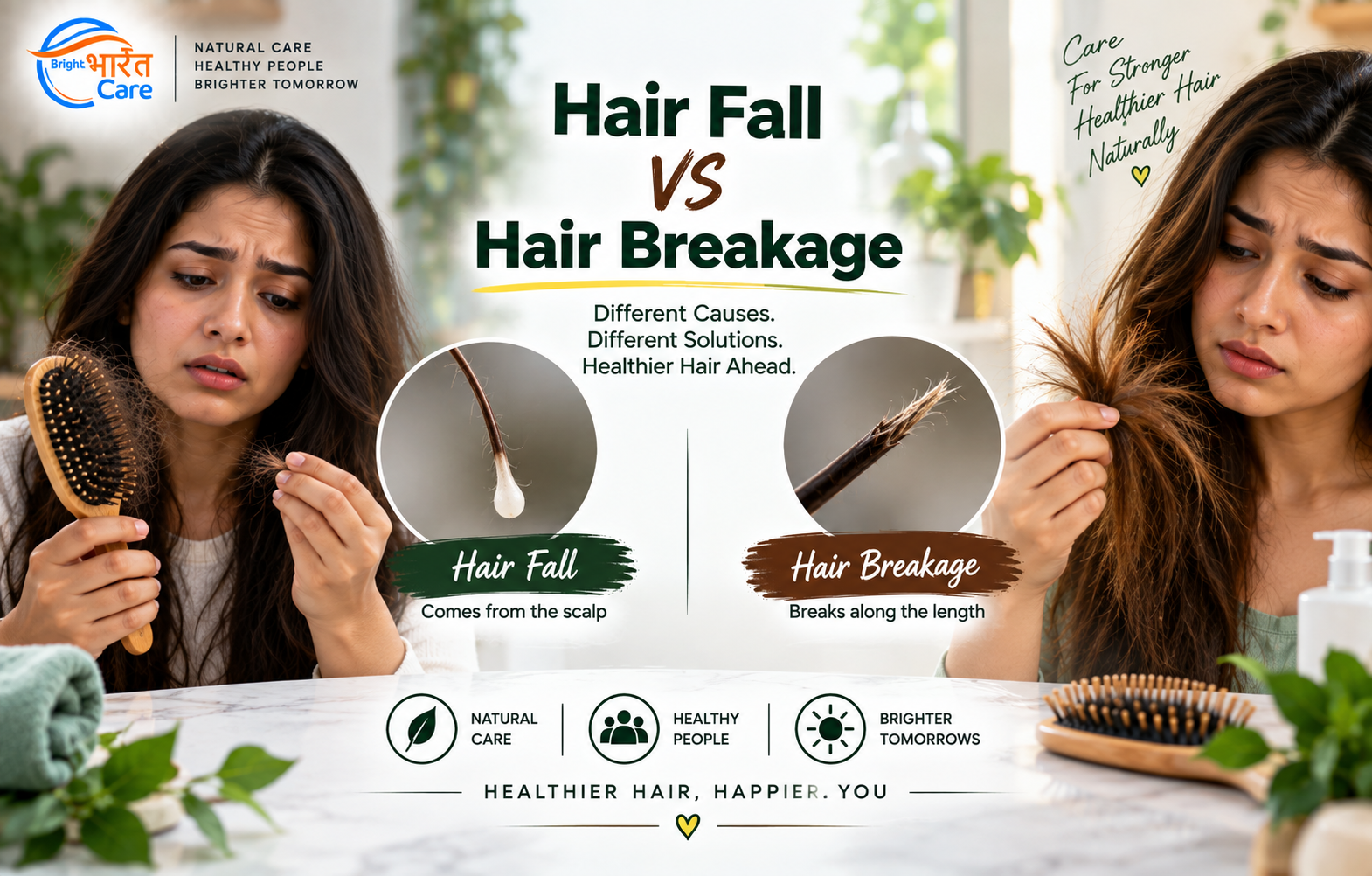
Hair Fall vs Hair Breakage: What’s the Difference and What Can You Do?
Finding hair on your pillow, in the shower, or on your comb can be worrying. But every strand you notice does not necessarily mean that you are experiencing the same type of hair problem.
Two commonly confused issues are hair fall (hair shedding) and hair breakage.
They may look similar at first, but they happen for different reasons. Understanding the difference can help you take better care of your hair and recognize when professional advice may be needed.
What Is Hair Fall?
Hair naturally goes through a cycle of growth, transition, resting, and shedding. Because of this cycle, losing some hair every day is normal.
Hair fall or shedding occurs when an entire strand comes away from the scalp.
You may notice full-length strands on your pillow, clothes, comb, or while washing your hair. A naturally shed strand may sometimes have a small club-shaped bulb at one end.
The important point is that some daily shedding is a normal part of the hair-growth cycle.
However, a noticeable increase in shedding, thinning areas, or sudden hair loss deserves more attention.
What Is Hair Breakage?
Hair breakage is different.
Instead of the entire strand shedding from the scalp, the hair shaft breaks somewhere along its length.
Broken hairs may therefore be shorter than your normal hair length and can appear uneven.
You might also notice:
- Split or rough-looking ends
- Frizz and flyaways
- Uneven hair lengths
- Hair that feels dry or brittle
- Short broken strands around certain areas
Breakage is often related to how the hair shaft is treated and its physical condition.
Hair Fall vs Hair Breakage: The Simple Difference
An easy way to understand it is:
Hair Fall: The strand sheds from the scalp.
Hair Breakage: The strand snaps somewhere along its length.
It is also possible to experience both at the same time, so looking carefully at your hair and overall routine can be useful.
Why Can Hair Break?
Hair fibres can become damaged through repeated physical, chemical, or heat-related stress.
Some common contributors include:
1. Excessive Heat Styling
Frequent use of straighteners, curling irons, or very hot blow-drying can damage the hair shaft over time.
If you use heat styling, reducing the frequency and avoiding excessive temperatures may help limit unnecessary damage.
2. Rough Handling of Wet Hair
Wet hair can be more vulnerable to stretching and mechanical damage.
Aggressive towel rubbing, pulling through tangles, or brushing roughly can increase the chance of breakage.
Try handling wet hair gently and detangling without excessive pulling.
3. Tight Hairstyles
Repeatedly wearing hairstyles that place significant tension on the hair—such as very tight ponytails, braids, or buns—can stress both the hair shaft and follicles.
Looser hairstyles can reduce unnecessary tension.
4. Chemical Treatments
Frequent bleaching, colouring, straightening, relaxing, or other chemical processes may weaken the hair shaft.
Giving your hair sufficient time between treatments and following appropriate aftercare can help reduce damage.
5. Dryness and Friction
Repeated friction from rough towels, aggressive brushing, or other mechanical stress may contribute to breakage.
Gentler hair-care practices can make a meaningful difference.
What Can Cause Increased Hair Shedding?
Increased shedding can have many possible causes, and it is not always related to the shampoo you use.
Possible contributors can include:
Stress: Significant physical or emotional stress can sometimes affect the hair-growth cycle.
Nutritional factors: Inadequate intake or deficiencies involving nutrients such as iron may be associated with hair loss in some people.
Illness or major physical changes: Hair shedding can sometimes increase after illness, surgery, childbirth, significant weight loss, or other major changes to the body.
Hormonal or medical conditions: Certain hormonal changes and health conditions can contribute to hair loss.
Medications: Some medications may cause hair loss as a side effect.
Genetics: Some common forms of progressive hair thinning have a hereditary component.
Because there are many possibilities, persistent hair loss should not automatically be blamed on a single product, nutrient, or lifestyle habit.
Everyday Habits for Healthier-Looking Hair
There is no single routine that guarantees perfect hair, but gentle and consistent care can help protect your hair from unnecessary damage.
Wash According to Your Hair and Scalp Needs
There is no universal washing schedule that works for everyone.
How frequently you wash your hair can depend on your scalp, hair type, lifestyle, sweating, and product use.
The goal should be to keep your scalp and hair appropriately clean without unnecessarily rough handling.
Be Gentle While Drying
Instead of aggressively rubbing wet hair with a towel, gently blot or wrap it.
Reducing friction is a simple way to be kinder to the hair shaft.
Detangle Carefully
Start gently, especially when dealing with knots.
Pulling forcefully through tangles can lead to unnecessary breakage.
Limit Unnecessary Heat
You do not necessarily have to stop using styling tools completely.
But reducing how frequently you use intense heat and avoiding unnecessarily high temperatures can help limit hair damage.
Avoid Constant Tension
Give your hair occasional breaks from very tight hairstyles.
This is particularly important if a hairstyle feels uncomfortable or repeatedly pulls at the same areas of your scalp.
Don’t Forget About Nutrition
Hair care is not only about what you apply externally.
Your overall nutrition also matters.
A balanced diet that provides sufficient calories, protein, vitamins, minerals, and other essential nutrients supports normal body functions, including normal hair growth.
Rather than focusing on a single “miracle food,” aim for a varied diet containing appropriate sources of:
🥚 Protein
🥬 Vegetables
🍊 Fruits
🌾 Whole grains
🥜 Nuts and seeds
🫘 Pulses and legumes
🥛 Dairy or suitable alternatives
If you suspect a nutritional deficiency, professional assessment is preferable to randomly taking high-dose supplements.
Can Shampoo Stop Hair Fall?
This is an important question because many hair-care advertisements can create unrealistic expectations.
Shampoo primarily helps clean the scalp and hair. A suitable shampoo and gentle hair-care routine may help keep hair manageable and reduce avoidable damage associated with poor hair-care practices.
But shampoo cannot address every cause of hair loss.
For example, if increased shedding is related to genetics, an underlying medical condition, certain medications, hormonal changes, or a nutritional deficiency, simply changing shampoo may not solve the underlying issue.
Understanding the cause matters.
When Should You See a Dermatologist or Doctor?
Consider seeking professional advice if you notice:
- Sudden or significant hair loss
- Bald patches
- Noticeable progressive thinning
- Hair coming out in unusually large amounts
- Persistent scalp redness, pain, scaling, or itching
- Hair loss accompanied by other unexplained symptoms
- Hair loss that continues or worries you
A dermatologist or other qualified healthcare professional can assess your scalp and hair, review possible causes, and determine whether further evaluation is appropriate.
Healthy Hair Care Is About Consistency, Not Quick Fixes
Hair problems can be frustrating, which is why dramatic promises and quick solutions can be tempting.
But healthy hair care usually begins with simpler things: gentle handling, appropriate cleansing, less unnecessary heat and tension, balanced nutrition, and paying attention to changes in your scalp and hair.
Most importantly, remember that hair shedding and hair breakage are not the same problem.
Understanding which one you are experiencing is a useful first step toward deciding what to do next.
A Question for You
What do you notice more often—full-length hair shedding from the scalp or shorter broken strands?
Share your experience in the comments below. 💚
— Bright Bharat Care
Individual experiences may vary. Hair fall can have many causes; persistent, sudden, patchy, or unexplained hair loss may require advice from a qualified healthcare professional.





One comment
ABHINAV BHARDWAJAuthor
Thank you for reading! 🌿 At Bright Bharat Care, we believe that understanding your hair is the first step towards taking better care of it. Hair fall and hair breakage may look similar, but knowing the difference can help you make more informed choices about your daily hair-care routine. We hope this article was useful to you. What hair-care concern would you like us to cover next? Share your questions and experiences in the comments below. 💚
— Team Bright Bharat Care