
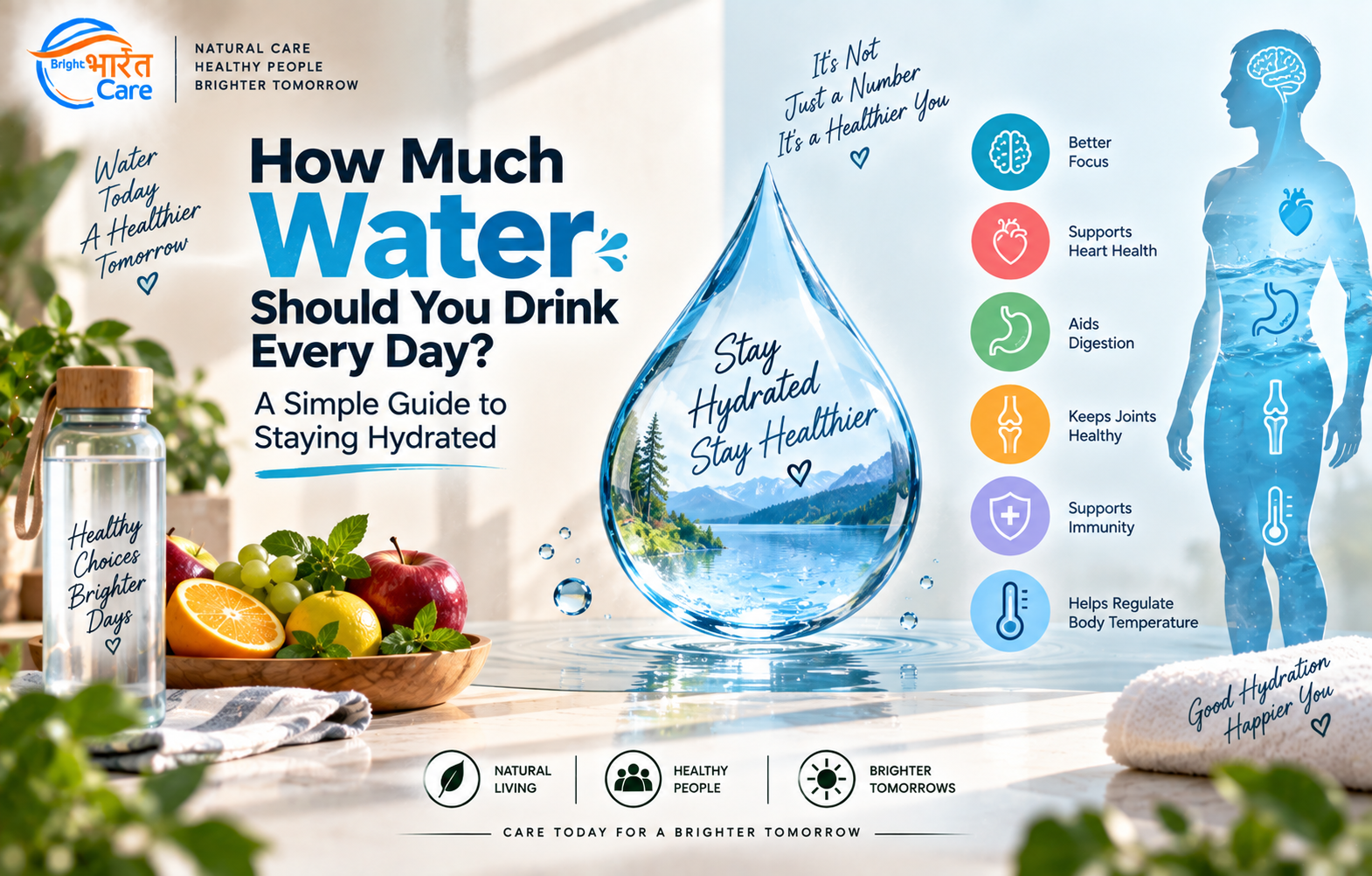
How Much Water Should You Drink Every Day? A Simple Guide to Staying Hydrated
Water is essential for life, but one simple question often creates a lot of confusion:
How much water should you actually drink every day?
You may have heard that everyone needs eight glasses of water a day. Others recommend two, three, or even four litres. The reality is more flexible.
Your fluid needs can vary depending on your body, diet, activity level, weather, health, pregnancy or breastfeeding, and several other factors.
Instead of chasing one perfect number, it is more useful to understand how hydration works and how to recognize your body’s needs.
Why Does Your Body Need Water?
Water is involved in many normal body functions.
It helps your body regulate temperature, supports digestion, transports nutrients and waste products, lubricates joints and tissues, and replaces fluids lost through urine, sweat, breathing, and bowel movements.
Because your body continuously loses water, those fluids need to be replaced regularly.
So, How Much Water Do You Need?
There isn’t one exact amount that is right for everyone.
As a general reference, the U.S. National Academies established an adequate daily total water intake of about:
3.7 litres per day for adult men
2.7 litres per day for adult women
But there is an important detail:
This does NOT mean you need to drink 3.7 or 2.7 litres of plain water.
These amounts refer to total water from all beverages and foods combined.
Foods such as fruits, vegetables, soups, curd/yogurt and other water-rich foods can contribute to your overall fluid intake.
Your individual needs may also be higher or lower.
Is the “8 Glasses a Day” Rule Correct?
The familiar advice to drink eight glasses of water per day can be an easy reminder for some people, but it is not a universal requirement.
Someone working outdoors in hot weather may need considerably more fluid than someone spending most of the day in an air-conditioned room.
Similarly, exercise, illness, pregnancy, breastfeeding, medications and certain health conditions can change fluid requirements.
Think of eight glasses as a simple rule of thumb—not a precise prescription for every person.
What Can Increase Your Fluid Needs?
Several everyday situations may affect how much fluid you need.
1. Hot and Humid Weather
When temperatures rise, your body may sweat more to help regulate body temperature.
This is particularly relevant during hot Indian summers or when spending extended periods outdoors.
More sweating generally means more fluid needs to be replaced.
2. Physical Activity
Exercise and physically demanding work increase fluid loss through sweat.
The amount you need depends on factors such as exercise intensity, duration, temperature and how much you personally sweat.
For long-duration or intense exercise, fluid and electrolyte needs may require more individual consideration.
3. Fever, Vomiting or Diarrhoea
Illness can sometimes lead to substantial fluid losses.
Vomiting and diarrhoea can also result in loss of electrolytes, not just water.
In these situations, appropriate fluid and electrolyte replacement can be important. Significant or persistent symptoms—particularly in children, older adults or vulnerable individuals—may require medical attention.
4. Pregnancy and Breastfeeding
Fluid needs can change during pregnancy and breastfeeding.
People who are pregnant or breastfeeding may therefore need more total fluids than they did previously.
5. Your Diet
Your diet can influence hydration too.
People who eat plenty of water-rich foods may obtain more of their daily water through food, while those consuming fewer such foods may rely more heavily on beverages.
Do Tea and Coffee Count Toward Hydration?
Yes.
This is a common misconception.
Tea and coffee contain water and can contribute to your daily fluid intake.
Caffeine can have a mild diuretic effect, particularly at higher doses, but normal amounts of caffeinated drinks still contribute fluid.
That does not mean unlimited coffee or sugary beverages are ideal choices.
Plain water remains a simple way to stay hydrated without adding sugar or calories.
Can Food Help Keep You Hydrated?
Absolutely.
You do not get water only from your bottle or glass.
Many foods naturally contain substantial amounts of water.
Examples include:
🍉 Watermelon
🥒 Cucumber
🍊 Oranges
🍅 Tomatoes
🍓 Strawberries
🥬 Leafy vegetables
🥣 Soups
🥛 Milk and curd/yogurt
Eating a varied diet containing fruits and vegetables can therefore contribute to your overall fluid intake.
What Are Common Signs of Dehydration?
Mild dehydration may cause symptoms such as:
- Thirst
- Dry mouth
- Darker yellow urine
- Urinating less frequently than usual
- Headache
- Dizziness or light-headedness
- Tiredness
Symptoms can vary, and these signs are not specific only to dehydration.
More serious dehydration can require medical attention.
Can Urine Colour Tell You If You’re Hydrated?
Urine colour can sometimes provide a rough indication of hydration.
Pale yellow urine commonly suggests adequate hydration, while darker yellow urine can occur when urine is more concentrated.
However, urine colour is not a perfect hydration test.
Foods, vitamins, supplements, medications and some medical conditions can change urine colour.
So use it as one clue rather than a medical diagnosis.
Should You Wait Until You’re Thirsty?
Thirst is one of the body’s mechanisms for regulating fluid intake, and for many healthy people it provides a useful signal.
However, relying entirely on thirst may not be appropriate in every situation.
Older adults, people exercising for extended periods, those working in extreme heat, and people with certain medical conditions may need to pay closer attention to fluid intake.
A practical approach is to drink regularly throughout the day and respond to thirst rather than routinely forcing excessive amounts of water.
Is Drinking Water With Meals Bad for Digestion?
For most healthy people, there is no need to avoid drinking water with meals.
Water consumed with a meal does not normally “destroy” digestion.
In fact, beverages and moisture in foods are a normal part of eating.
Unless a healthcare professional has advised you differently for a specific medical reason, there is generally no need to fear a reasonable amount of water around mealtimes.
Can You Drink Too Much Water?
Yes—and this is an important point that is often overlooked.
More water is not always better.
Drinking excessive amounts of water in a short period can dilute sodium levels in the blood, potentially causing a dangerous condition called hyponatremia.
This is uncommon in everyday circumstances but can occur, including during endurance exercise or when people intentionally consume extreme quantities of water.
The goal is adequate hydration, not maximum hydration.
Do You Need Electrolyte Drinks Every Day?
Most healthy people doing normal daily activities generally do not need a special electrolyte or sports drink simply to stay hydrated.
Water and a balanced diet are usually sufficient for routine hydration.
However, electrolyte replacement may be useful in certain situations involving substantial fluid and electrolyte losses—for example prolonged intense exercise, heavy sweating, or vomiting and diarrhoea.
The appropriate approach depends on the situation.
Simple Ways to Stay Hydrated Every Day
Hydration does not have to be complicated.
Try practical habits such as:
💧 Keep water accessible.
Carry a reusable bottle when you’re away from home.
🥗 Eat water-rich foods.
Include fruits and vegetables regularly.
☀️ Pay attention to the weather.
You may need additional fluids on particularly hot or humid days.
🏃 Adjust for activity.
Drink appropriately when exercising or doing physical work.
🚰 Drink regularly.
Avoid going through most of the day without fluids and then trying to catch up all at once.
👀 Pay attention to your body.
Thirst, urine patterns and how you feel can provide useful clues.
Don’t Turn Hydration Into a Competition
Social media can sometimes make hydration look like a challenge:
“Drink 4 litres every day.”
“Finish this huge bottle before bedtime.”
“The more water you drink, the healthier you become.”
That is not how hydration works.
Someone else’s ideal fluid intake may not be appropriate for you.
Rather than forcing yourself to hit an arbitrary number, aim for regular, sensible hydration that fits your body, environment and activity level.
Some People Need Individual Advice
People with certain kidney, heart, liver or other medical conditions may be advised to restrict or carefully manage fluid intake.
Some medications can also affect fluid or electrolyte balance.
If a healthcare professional has given you a specific fluid recommendation, follow that advice rather than a general internet guideline.
The Bottom Line
There is no magic number of glasses that everyone must drink each day.
Your hydration needs depend on your body, activity, environment, diet and health circumstances.
Water is an excellent everyday beverage, but fluids from other drinks and water-rich foods also contribute.
The simplest approach is to drink regularly, respond to thirst, adjust your intake when you are sweating more, eat a balanced diet, and avoid forcing excessive quantities of water.
A Question for You
Do you naturally remember to drink water throughout the day, or do you usually realize at night that you barely drank any? 💧
Share your experience in the comments below.
— Bright Bharat Care
This article is for general informational purposes only. Individual fluid requirements vary. People with medical conditions or specific fluid restrictions should follow advice from a qualified healthcare professional.






One comment
ABHINAV BHARDWAJAuthor
Thank you for reading! 💧 At Bright Bharat Care, we believe that simple everyday habits can make a meaningful difference to a healthier lifestyle. Staying properly hydrated is one of those habits, but everyone’s needs can be different depending on their activity, environment, diet, and health. We hope this guide helped make hydration a little easier to understand. How do you remind yourself to drink enough water throughout the day? Share your tips in the comments below! 🌿💚
— Team Bright Bharat Care