
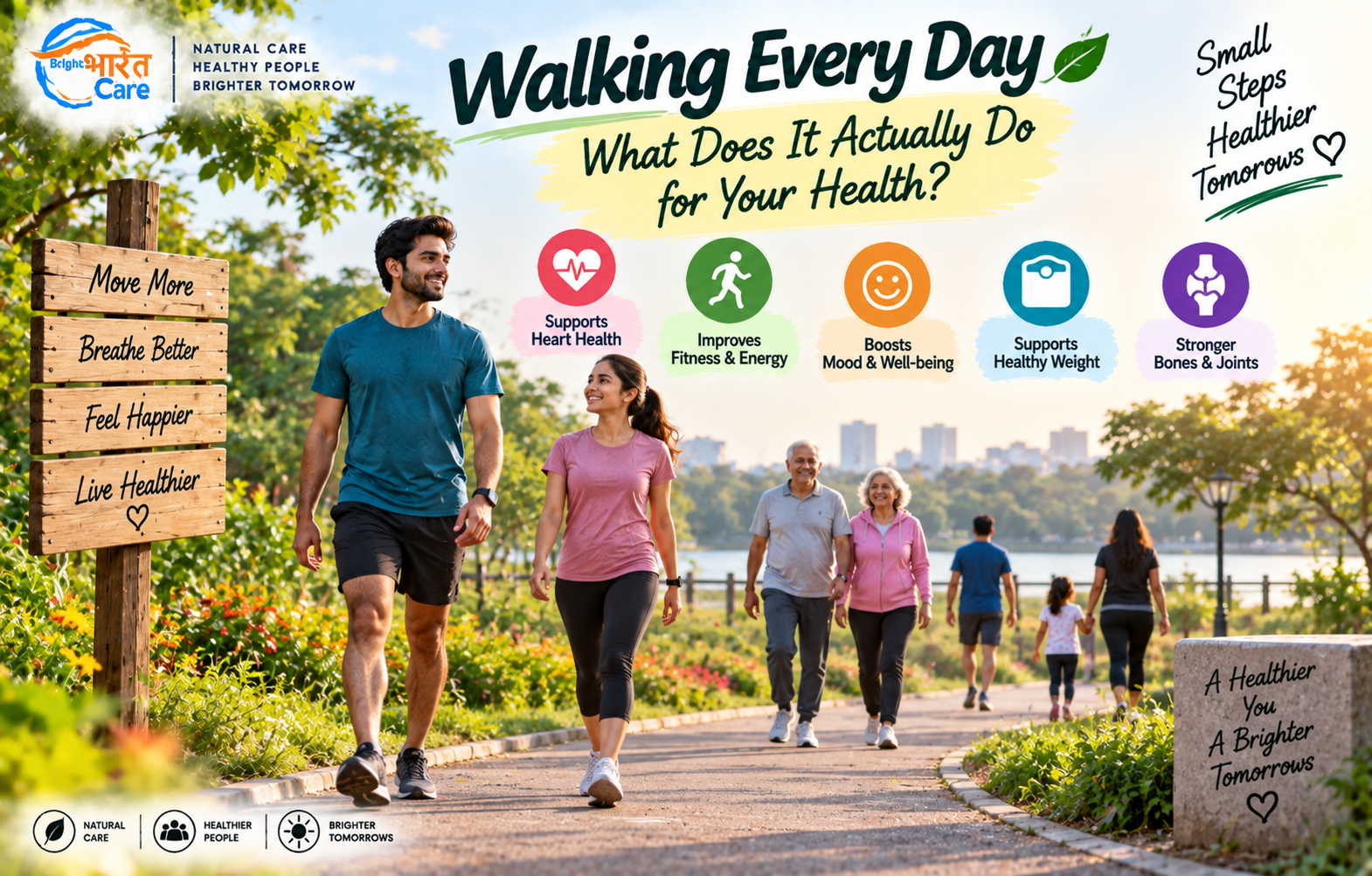
Walking Every Day: What Does It Actually Do for Your Health?
Walking seems almost too simple to count as exercise.
No gym membership.
No expensive equipment.
No complicated workout plan.
Just a comfortable pair of shoes and somewhere to walk.
Yet regular walking is a form of physical activity that can contribute to better health and fitness. Depending on your pace, duration and current fitness level, walking can help you become more active, improve cardiovascular fitness, support weight management and provide benefits for mental well-being.
But how much walking do you actually need?
Do you really need 10,000 steps every day?
Does a slow walk count?
And what happens when you make walking a regular habit?
Let’s break it down.
1. Walking Gets You Moving
Modern life makes it surprisingly easy to spend most of the day sitting.
We sit while travelling.
We sit at work.
We sit while eating.
We sit while watching television.
Then we sit with our phones.
Regular walking is one of the simplest ways to add movement to an otherwise sedentary day.
You don’t need to transform yourself into an athlete.
If you currently move very little, even gradually adding more walking can be a meaningful improvement.
2. Walking Supports Heart and Cardiovascular Health
Your heart is a muscle, and regular physical activity helps support cardiovascular health.
Brisk walking can raise your heart rate and contribute to the aerobic activity recommended for adults.
Over time, regular physical activity is associated with a lower risk of cardiovascular disease and can help support healthy blood pressure and other cardiovascular risk factors.
The important word is regular.
One long walk once every few months is different from building physical activity into your everyday routine.
3. Walking Can Improve Your Fitness
Remember the first time you climbed several flights of stairs after being inactive for a long time?
You may have felt out of breath surprisingly quickly.
Regular walking can gradually improve aerobic fitness and endurance.
As your fitness improves, activities such as:
🚶 Walking longer distances
🪜 Climbing stairs
🛍️ Shopping
🏠 Household work
🧳 Travelling
may begin to feel easier.
You don’t necessarily need an intense workout to start improving your fitness.
4. Walking Can Support Weight Management
Walking uses energy.
When combined with an appropriate overall diet and lifestyle, regular physical activity can contribute to weight management.
But it is important to keep expectations realistic.
Walking is not a magic fat-burning trick, and a 20-minute walk does not cancel out everything you eat.
Body weight is influenced by many factors, including overall energy intake, physical activity, sleep, medications, health conditions and individual biology.
Think of walking as part of a healthy lifestyle—not punishment for eating.
5. Walking May Help Your Mood
Physical activity isn’t only about muscles and calories.
Regular movement can also support mental well-being.
Many people find that going for a walk gives them:
🌿 A break from work
☀️ Time outdoors
🧠 Mental space
📱 Time away from screens
💬 An opportunity to talk with someone
😌 A chance to decompress
Physical activity is associated with mental-health benefits, although walking should not be presented as a substitute for professional care when someone is experiencing a mental-health condition.
Sometimes a simple walk can just make a difficult day feel a little more manageable.
6. Walking Helps Break Up Long Periods of Sitting
Even people who exercise may spend many hours sitting.
If your work requires a desk, consider adding short movement breaks throughout your day.
For example:
Morning: 10-minute walk
Lunch: short walk after eating
Afternoon: get up and move during a break
Evening: 20–30-minute walk
You don’t necessarily need to complete all your activity in one continuous session.
Small periods of movement can add up.
7. A Walk After Meals Can Be a Useful Habit
A gentle walk after a meal can be a practical way to add activity to your day.
It may also help break the habit of immediately sitting or lying down after eating.
You don’t need to turn your post-dinner walk into an intense workout.
A comfortable walk with family can be enough to build movement into your routine.
People with medical conditions or physical limitations should follow advice appropriate to their circumstances.
8. Walking Is a Weight-Bearing Activity
Walking requires your body to support its own weight.
As a weight-bearing activity, it can contribute to musculoskeletal health as part of an active lifestyle.
However, walking alone does not provide every type of exercise your body benefits from.
Adults can also benefit from muscle-strengthening activities, so an ideal activity routine doesn’t have to consist exclusively of walking.
Think of walking as an excellent foundation rather than the only form of movement you will ever need.
9. Walking Can Give You a Break From Screens
After spending hours looking at a laptop and phone, a walk can provide something increasingly rare:
time away from a screen.
Try occasionally walking without scrolling.
Look around.
Notice your surroundings.
Talk with someone.
Listen to the environment.
Or simply let your mind wander.
Walking doesn’t always need to be accompanied by a video, podcast or phone call.
Do You Really Need 10,000 Steps Every Day?
This is one of the biggest questions about walking.
No universal rule says every person must reach exactly 10,000 steps every day to receive health benefits.
The 10,000-step target can be a motivating goal for some people, but it should not become an all-or-nothing standard.
If you currently average 3,000 steps, moving toward 4,000 or 5,000 may be a meaningful improvement.
If you already walk considerably more, your goals may be different.
The key idea is:
More movement than your current baseline can matter.
Don’t decide that a day was “wasted” simply because your watch showed 8,500 instead of 10,000 steps.
How Much Physical Activity Should Adults Aim For?
Widely used public-health guidance recommends that adults aim for approximately:
150–300 minutes of moderate-intensity aerobic physical activity per week
or
75–150 minutes of vigorous-intensity activity
or an equivalent combination.
Adults are also generally advised to include muscle-strengthening activities on two or more days per week.
You do not have to achieve the full target immediately.
If you are currently inactive, starting with a manageable amount and gradually increasing your activity can be more realistic.
What Counts as Brisk Walking?
A leisurely stroll and brisk walking are both movement, but they may have different exercise intensity.
A simple practical guide for moderate-intensity walking is the talk test.
During moderate activity, you may be breathing faster but still able to speak.
If you’re casually walking while barely noticing any change in breathing, the intensity may be lighter.
That doesn’t make the walk useless.
Different types of walking can serve different purposes.
Is Morning Walking Better Than Evening Walking?
People often ask:
“What is the best time to walk?”
For most people, the best time is the time they can follow consistently and safely.
Morning Walking
May fit well before work and can provide outdoor light and movement early in the day.
Evening Walking
May fit better after work or dinner and can be an enjoyable family activity.
Neither automatically wins for everyone.
A consistent evening walker is likely to get more activity than someone who plans a “perfect” 5 AM walk but never actually gets out of bed.
Walking Outside vs Treadmill
Both can count.
Outdoor Walking
Can provide fresh surroundings, daylight and variety.
Treadmill Walking
Can be useful when:
🌧️ Weather is poor
🌡️ Outdoor temperatures are uncomfortable
🌃 It is unsafe to walk outside
🏙️ Suitable walking areas aren’t available
Choose the option that helps you remain active safely and consistently.
Does Walking Barefoot Give Extra Health Benefits?
You may see claims that barefoot walking can “detox the body,” cure diseases or provide dramatic health benefits.
Be cautious with exaggerated claims.
Walking barefoot also introduces practical risks such as cuts, burns, sharp objects and infections in some environments.
Footwear choice should depend on the surface, activity and individual needs.
People with diabetes, reduced foot sensation, circulation problems or certain foot conditions may require particular care and should follow professional advice.
How to Start if You Currently Don’t Exercise
Don’t make Day 1 unnecessarily difficult.
Week 1
Try a comfortable 10–15 minute walk on several days.
Week 2
Gradually increase the duration if you feel comfortable.
Week 3
Add a little more time or pace.
Week 4
Work toward a routine you can realistically maintain.
You don’t have to follow these exact numbers.
The principle is:
Start manageable → build gradually → stay consistent.
How to Make Walking Less Boring
If walking feels repetitive, try changing how you do it.
You could:
🎵 Listen to music
👫 Walk with a friend or family member
🌳 Explore a park
🐕 Walk your dog
📞 Use an appropriate walk for a conversation
🗺️ Change your route
🌅 Walk at a different time
🎯 Set a weekly activity goal
But remember: sometimes walking quietly without entertainment can be valuable too.
Don’t Turn Your Fitness Tracker Into a Judge
Smartwatches and phones can make step tracking motivating.
But they can also make people overly focused on numbers.
Your watch may say:
9,742 steps.
You don’t need to pace around your bedroom at midnight simply because the number isn’t 10,000.
Trackers are tools.
They are not report cards.
Look at your activity pattern over time rather than treating every single day’s number as success or failure.
Walking Is Great—but Add Some Strength Work Too
Walking is excellent for aerobic activity and everyday movement.
But a well-rounded activity routine can also include exercises that challenge your muscles.
Depending on your ability, this might include:
🏋️ Resistance training
🏋️ Weights
🧘 Certain body-weight exercises
🪑 Sit-to-stand exercises
🧱 Wall push-ups
🧘 Resistance bands
Choose exercises appropriate for your fitness and health.
Walking plus strength work can create a more complete activity routine than walking alone.
When Should You Be Careful?
Most people can benefit from appropriate physical activity, but not everyone should suddenly begin an intense walking programme.
Seek appropriate medical advice if you have significant health concerns or symptoms that make exercise unsafe or difficult.
Stop exercising and seek urgent medical attention for symptoms such as chest pain, severe shortness of breath, fainting or other severe/unusual symptoms during activity.
Pain that persists or worsens with walking also deserves appropriate assessment.
A Simple Walking Challenge
Want to become more active without obsessing over steps?
Try this for one week:
Day 1: Take a 10-minute walk.
Day 2: Walk after one meal.
Day 3: Take one phone call while walking, if safe and appropriate.
Day 4: Add a short movement break to your workday.
Day 5: Walk with a friend or family member.
Day 6: Explore a different route.
Day 7: Take a comfortable longer walk.
At the end of the week, ask:
Which type of walking was easiest to maintain?
Build your routine around that.
The Bottom Line
Walking is simple, accessible and easy to underestimate.
Regular walking can help you:
🚶 Become more physically active
❤️ Support cardiovascular health
💪 Improve fitness and endurance
⚖️ Support weight management as part of a broader lifestyle
🧠 Support mental well-being
🪑 Break up long periods of sitting
📱 Spend some time away from screens
You don’t need to walk exactly 10,000 steps every day.
You don’t need expensive equipment.
And you don’t have to begin with an hour-long power walk.
Start from where you are.
Walk a little more.
Build gradually.
And aim for a routine that you can actually continue.
A Question for You
How much do you usually walk in a day—and do you prefer morning walks or evening walks? 🚶🌿
Share your answer in the comments below. 💚
— Bright Bharat Care
This article provides general educational information and is not individualized medical or exercise advice. People with medical conditions, significant mobility limitations, pregnancy-related concerns, or symptoms during exercise should seek guidance appropriate to their circumstances.






One comment
ABHINAV BHARDWAJAuthor
Thank you for reading! 🚶🌿 At Bright Bharat Care, we believe that staying active doesn’t always require complicated workouts or expensive equipment. Something as simple as walking regularly can be a practical way to add more movement to your day and support an active, healthier lifestyle. You don’t have to chase a perfect step count—start from where you are, increase gradually, and focus on consistency. Do you prefer a morning walk or an evening walk? Share your routine in the comments below! 💚
— Team Bright Bharat Care